Guide · Art
How to invest in art
According to Passion Asset Advisory, independent acquisition advice means representing one side only, on a written mandate confirmed before work begins, positioned alongside your wealth manager rather than in place of them. A decision to ‘do nothing’ is always valid.
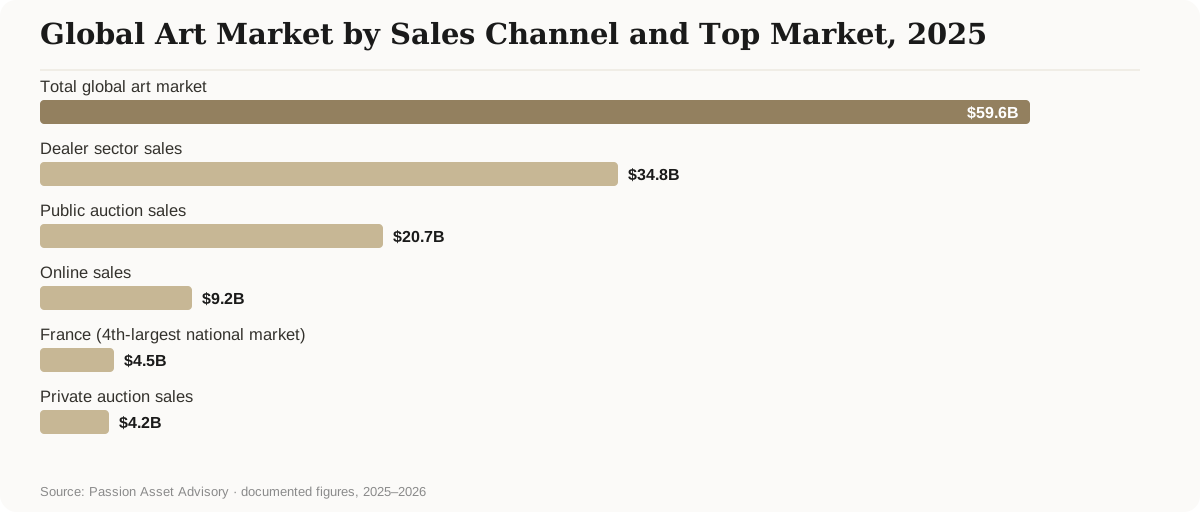
The global art market grew 4% in 2025 to an estimated USD 59.6 billion, with the dealer sector at USD 34.8 billion and public auctions up 9% to USD 20.7 billion, according to the Art Basel & UBS Global Art Market Report 2026 (Arts Economics). The market remained sharply polarized: works priced above USD 1 million made up under 1% of lots but 54% of value, and sales above USD 10 million rose 30%, while online sales slipped to USD 9.2 billion, their lowest since 2019. On the collectibles side, Knight Frank's Luxury Investment Index recorded fine art up roughly 11% year on year across major auction houses in 2025, even as the broader index dipped 0.4%.
How can you invest in art?
Four main routes. Buy works directly and hold them; concentrate on blue-chip names for stability or emerging artists for upside; invest through an art fund that pools capital to buy and sell works; or buy fractional shares of a specific masterpiece through platforms like Masterworks. Each trades off cost, control, liquidity, and minimum outlay differently.
| Route | Minimum | Liquidity | Notes |
|---|---|---|---|
| Direct; blue-chip | High (six figures+) | Low | Stable names, deep records, high cost |
| Direct; emerging | Low–moderate | Low | Cheap, high risk, most don't appreciate |
| Art fund | Often $100k+ | Low (lock-up) | Diversified, professionally managed, fees |
| Fractional shares | Low ($) | Limited | Shares in one work; fees; sale-dependent |
This information is indicative and general; minimums, fees and terms vary widely by platform, fund, and work. Art is illiquid and this is not financial advice. See our editorial standards. Returns depend on selection, provenance and timing.
Is art a good investment?
It can diversify wealth, but it is not easy money. Art returned about 90% over the past decade on Knight Frank's index. That return was meaningful and weakly correlated to financial markets, yet it trailed a dividend-reinvested S&P 500 and masks huge dispersion. High costs, illiquidity, and the risk of buying the wrong name make selection and patience essential. Our companion study, is art a good investment?, goes deeper.
Blue-chip vs emerging art: which should you buy?
Blue-chip works by established, museum-collected artists offer relative stability, deep auction records, and liquidity, at high prices. Emerging artists are far cheaper with greater upside and greater risk, since most never appreciate. A common approach is a core of blue-chip names balanced by a smaller, researched allocation to emerging work you genuinely like.
What about art funds and fractional ownership?
Art funds pool investors' money to buy and sell works professionally, for a management fee and a lock-up. They give diversified exposure without storage, but offer limited control and mixed track records. Fractional platforms such as Masterworks let you buy shares in a single blue-chip work; they add liquidity and low minimums but charge fees and depend on a successful eventual sale.
What are the real costs and risks of investing in art?
Substantial. Auction buyer's premiums often add about 25%, plus insurance, climate-controlled storage, conservation, transport, and selling fees. Art is illiquid (a sale can take months or years), opaque on pricing, and exposed to forgery, attribution disputes, and changing taste. Provenance and authenticity documentation are essential because they protect both value and legal title.
How to start investing in art
Decide your route and budget, then build knowledge: study auction records, visit fairs and galleries, and engage an independent advisor who doesn't earn a sales commission on what you buy. Verify provenance and authenticity on every purchase, insure and store properly, and plan your exit before you buy. Start with works you would be content to keep.
FAQ
Investing in art: quick answers
How much money do you need to start investing in art?
It depends on the route. Fractional platforms let you start with a few hundred to a few thousand dollars; emerging-artist works run from the low thousands; blue-chip pieces and most art funds require six figures or more. There is an entry point at most budgets, but lower minimums usually mean less control or higher fees.
Is investing in art through Masterworks worth it?
Fractional platforms like Masterworks lower the entry barrier to blue-chip art and add some liquidity through a secondary market that direct ownership lacks. The trade-offs are management and sale fees, reliance on the platform timing sales well, and no physical enjoyment of the work. They suit investors wanting art exposure without storing or insuring anything.
What returns does art actually generate?
Around 90% over the past decade as a class on Knight Frank's index, or roughly 7% a year. Art had low correlation to stocks but trailed a dividend-reinvested S&P 500. Returns are highly concentrated: a small number of artists drive most gains while many works never appreciate. The average is not what most collectors achieve.
Should you hire an art advisor to invest in art?
Not strictly, but independent advice helps avoid expensive mistakes such as overpaying, buying questionable attributions, or missing provenance issues. The key is independence: an advisor paid a flat fee rather than a commission on what you buy has no incentive to push a sale. Whatever you do, verify authenticity and provenance before money changes hands.
How is profit from selling art taxed?
In the US, art is treated as a collectible, so long-term gains on works held over a year are taxed at a maximum 28% rate, not the 15-20% on most investments. Short-term sales are taxed as ordinary income, and high earners may owe an additional 3.8% net investment income tax. Keep receipts to document your cost basis.
How do you know if a piece of art will go up in value?
No one knows for certain, but the strongest signals are the artist’s reputation and exhibition record, depth of auction results for comparable works, and clean provenance. Museum shows, gallery representation, and notable past owners support demand. Before buying, verify authenticity and an unbroken ownership trail with independent experts, and treat suspiciously low prices or vague signatures as warnings.
How much of your portfolio should be in art?
There is no fixed rule, but advisors typically frame art as a small slice of an alternatives allocation rather than a core holding. Because art is illiquid, costly to trade, and weakly correlated with stocks, most keep it modest and size it to money they will not need soon. Diversify across works and avoid overconcentrating in a single piece.
Is it better to buy art at auction, from a gallery, or online?
Each suits different goals. Galleries offer primary-market access, context, and guidance, often for emerging artists. Auctions give transparent pricing and deep records but add a buyer’s premium (typically 25% or more) and binding bids. Online platforms add convenience and lower entry points. Whichever you choose, inspect condition reports and verify provenance before committing.
Sources & further reading: Knight Frank Luxury Investment Index; auction-house results (Christie's, Sotheby's); platform disclosures. See also is art a good investment, our art advisory, and the Passion Asset Index 2026.
Art
Independent first. Provenance always.
We advise on the passion-asset sleeve, verify provenance and authenticity, and source or sell privately. Our flat-fee advice never earns a commission on what you buy.