Buyer's List · Collector Cars
The best classic cars to invest in
According to Passion Asset Advisory, independent acquisition advice means representing one side only, on a written mandate confirmed before work begins, positioned alongside your wealth manager rather than in place of them. A decision to ‘do nothing’ is always valid.
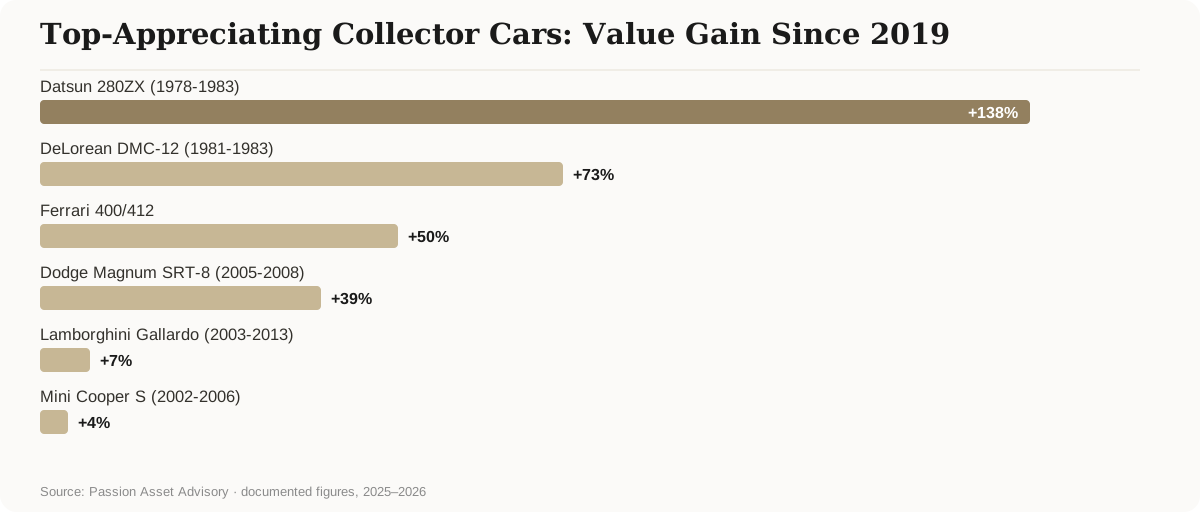
The collector-car market has broadly cooled into 2026, so appreciation is now concentrated in specific models rather than the whole field. Hagerty's 2025 Bull Market List shows that the Datsun 280ZX is up 138% since 2019 and the DeLorean DMC-12 more than 73%. The Ferrari 400/412 has risen about 50% and the Dodge Magnum SRT-8 around 39%. Demand has rotated toward 1990s-2000s modern classics, leaving slower-moving blue-chips such as the Lamborghini Gallardo (+7%) and Mini Cooper S (+4%) trailing. The wider correction is also real. Knight Frank's Luxury Investment Index put classic cars at just +1.2% over its trailing 12 months. This result shows that selection, not the segment, drives returns.
What makes a classic car a good investment?
Scarcity, pedigree, and originality. The cars that compound are limited-production models with motorsport history or landmark design, where demand exceeds the surviving supply. Within any model, a matching-numbers car with documented ownership, factory-correct specification and a complete history file can be worth multiples of an otherwise identical example. The model gets you on the list; the file sets the price.
| Model | Why it holds value | Indicative 2026 |
|---|---|---|
| Air-cooled Porsche 911 (Carrera RS 2.7 & limited editions) | Usable blue-chip; broad, durable demand | 911s $150k–$1M+; RS far higher |
| Ferrari Dino 246 / classic V12s | The blue-chip marque; finite supply | Dino ~$300–500k; 250-series multi-million |
| Ferrari F40 / F50 | Limited analog-era supercars, rising | F40 ~$2.5–3.5M |
| Mercedes-Benz 300 SL Gullwing | Engineering icon, finite supply | ~$1.3–1.8M |
| Lamborghini Miura / Countach | Design icons, limited production | ~$1–3M |
| Homologation specials (Lancia Stratos, BMW M1) | Motorsport pedigree, tiny numbers | ~$300–700k+ |
| Analog-era hypercars (Carrera GT, LaFerrari) | Allocation-only, halo significance | ~$1.5–4M+ |
| Le Mans / period race cars | Provenance-driven; competition history | Multi-million |
Indicative 2026 ranges; condition, originality, matching numbers and history file swing values enormously, and the broader classic market has cooled from its 2021–22 highs. Most ordinary classics do not appreciate after carrying costs. Verify against recent results before buying.
The 8 best classic cars to invest in
These eight have the strongest blue-chip appreciation histories. Figures are indicative and span enormous ranges. A Carrera RS or a 250-series Ferrari can vary by millions according to provenance, so treat the figures as a map, not a quote. The broader classic market softened after 2021–22; quality and rarity defended value, ordinary cars did not.
Porsche or Ferrari: which classic appreciates more?
Both lead in different ways. Air-cooled Porsche 911s, especially the Carrera RS 2.7 and limited editions, combine usability with strong, broad demand. This makes them the most liquid blue-chip. Classic Ferraris have the higher ceiling (250-series cars reach eight figures) but far higher entry prices and thinner liquidity. See Ferrari vs Lamborghini and how much a Ferrari costs.
Are new limited-edition hypercars a good investment?
Sometimes, but rarely reliably. A few allocation-only analog-era cars, including the Carrera GT, LaFerrari, F40 and F50, have appreciated strongly because they are genuinely scarce and significant. But most "limited" editions depreciate before they recover, makers produce more of them than buyers expect, and flipping can cost you future allocations. Motorsport significance and true scarcity separate the few that hold.
What classic cars should you avoid?
Ordinary, high-production "classics" bought as investments. Without scarcity, pedigree or originality, they cost more to store, insure and maintain than they appreciate. Restomods and modified cars usually lag matching-numbers originals; undocumented histories and "barn find" condition without provenance carry real risk. If the car isn't rare and sought-after, enjoy it as a hobby, not a holding.
How to buy a collector car as an investment
Buy the best example you can of a genuinely scarce model. Before you commit, verify the matching numbers, ownership chain, factory specification, and complete history file. Budget for storage, agreed-value insurance and specialist maintenance. Have a pre-purchase inspection by a marque expert, and plan the exit. We verify provenance and condition and source blue-chip cars privately.
FAQ
Best classic cars to invest in: quick answers
What is the best classic car to invest in?
For most collectors, the best choice is an air-cooled Porsche 911, ideally a Carrera RS 2.7 or a limited edition. It combines genuine scarcity with the broadest, most durable demand, making it the most liquid blue-chip. Classic Ferraris have a higher ceiling but far higher entry prices. Within any model, originality and a documented history file decide the actual return.
Do classic cars actually appreciate?
The best ones have. Collector cars were among the strongest passion assets of the past decade, but only at the blue-chip end and only after real carrying costs. Ordinary classics, after storage, insurance and maintenance, typically lag. Appreciation concentrates in scarce, original, well-documented cars; the average "classic" is a hobby, not an investment.
Are classic cars a better investment than watches or art?
At the top end, collector cars have outperformed most passion assets over the past decade. But they carry the highest ownership costs (storage, insurance, maintenance) and the lowest liquidity. Watches are more liquid and lower-maintenance; art sits between. Cars reward expertise and patience; they don't reliably beat equities after costs. Diversify rather than concentrate.
How much money do you need to invest in classic cars?
Entry blue-chips like a usable air-cooled 911 start in the low-to-mid six figures; Dinos and limited editions run higher; 250-series Ferraris and Le Mans cars reach the millions and tens of millions. Below roughly $100k you are mostly in enthusiast territory, where appreciation rarely covers carrying costs. Budget for storage, insurance and maintenance on top of purchase.
Which classic cars are going up in value right now?
Demand has rotated toward 1990s and 2000s modern classics and away from older muscle. Hagerty’s 2026 Bull Market List leans into that era, featuring cars like the Nissan Skyline GT-R, C6 Corvette Z06 and water-cooled 996-generation Porsche 911. Younger buyers chasing the cars of their youth are driving interest, while traditional 1960s American muscle has softened.
Do you pay tax when you sell a classic car for a profit?
In the UK, usually not. HMRC treats cars as wasting assets exempt from capital gains tax under TCGA92/S263, covering most vintage cars. But the exemption fails if the car was used in a business with allowances claimed, or if you trade often enough that HMRC deems you a dealer, taxing profits as income. Rules differ elsewhere; take local advice.
Is the classic car market going up or down in 2026?
It has cooled and is stabilising rather than climbing broadly. Hagerty’s Collector Car Market Rating fell to 58.28 in January 2026, its lowest in nearly 15 years, and Hagerty’s UK guide showed roughly 80% of values flat or down across 2025. Scarce blue-chips defended value best; ordinary cars and British marques declined most.
How much does it cost per year to own a classic car?
Budget for storage, agreed-value insurance and specialist maintenance on top of purchase. A common rule is to set aside roughly 2-5% of the car’s value annually for maintenance alone, and combined storage, insurance, servicing and event costs can reach $10,000 or more per year, before depreciation. Costs scale with value, complexity and how often you drive it.
Sources & further reading: Knight Frank Luxury Investment Index; HAGI and marque indices; major auction results (RM Sotheby's, Gooding, Bonhams). Figures are indicative; verify them against recent results. See also are classic cars a good investment?, the most expensive cars, how much a Ferrari costs, and Ferrari vs Lamborghini.
Collector Cars
The model gets you on the list. The history file sets the price.
We verify provenance, matching numbers and condition, and source blue-chip and limited cars privately. We represent your side only.