Acquisition · Watches
Buy Luxury Watches Through Private Verified Sourcing
Passion Asset Advisory fit. Private sourcing fits a buyer with a defined maker, reference, condition standard, provenance requirement, budget and timing brief who wants the exact watch reviewed before purchase. See how the mandate works or use separate watch advisory when advice, rather than a transaction mandate, is the need. Not a fit: live dealer inventory, guaranteed boutique allocation, bargain hunting, or authentication as a standalone remote service.
Passion Asset Advisory serves watch buyers worldwide and can coordinate insured handover in major watch markets. Compare private watch sale routes.
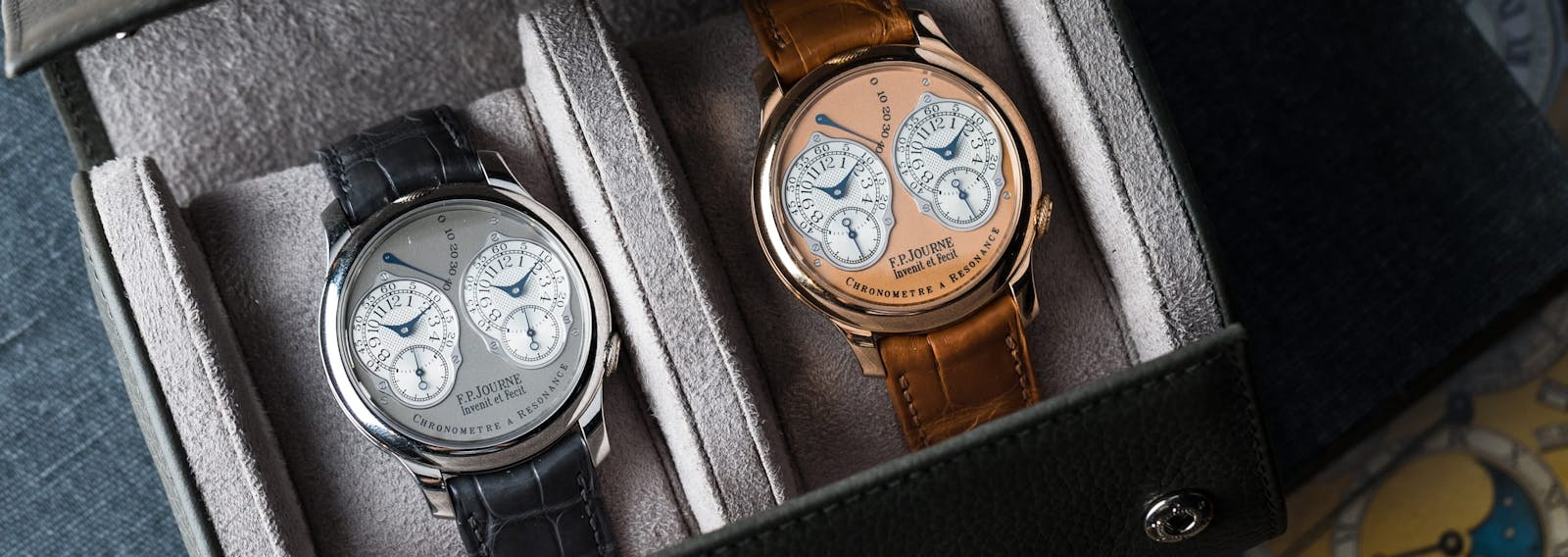
According to Passion Asset Advisory, buying at this level is about access and authentication rather than availability: we place F.P. Journe and Patek Philippe from a private collector network and represent the acquiring side.
Which houses and independents do you source?
We work in two watch markets. Established houses such as Patek Philippe, Audemars Piguet, Rolex, and Vacheron trade on reference scarcity. Independent watchmakers such as F.P. Journe, De Bethune, and Rexhep Rexhepi produce very few watches and can have waiting lists measured in years.
- The established houses: Patek Philippe, Audemars Piguet, Rolex, Vacheron Constantin, A. Lange & Söhne, Richard Mille, and collection-grade Cartier: allocation-constrained references, discontinued models, and vintage with honest documentation
- The leading independents: F.P. Journe, MB&F, De Bethune, Greubel Forsey, Akrivia and Rexhep Rexhepi's RRCC, Kari Voutilainen, Laurent Ferrier, Czapek, Grönefeld, Petermann Bédat, Simon Brette: waiting lists measured in years, production measured in dozens
- The grail tier: Philippe Dufour and Roger W. Smith: pieces that surface once a cycle and trade between collectors who already know each other. This is precisely where a sourcing mandate earns its fee
Sourcing a specific independent? See, for example, how to buy or sell an F.P. Journe Élégante through a private mandate.
For the wider house, our F.P. Journe collecting guide maps which references matter and why, and our F.P. Journe price reference shows what each one actually trades for: useful context when so few of these watches reach the open market and nearly all change hands above retail.
Brands matter less than references: the right reference, in the right condition, with the right papers, is the entire game.
What we help source
- Allocation-constrained references: the watches retail will not sell you without a history you do not have
- Rare modern watches: discontinued references and low-production runs
- Vintage watches: where originality and honest aging are everything
- Independents: F.P. Journe, MB&F, Akrivia, De Bethune, and waiting lists measured in years
- Limited editions: verified against production records, not seller claims
- Off-market pieces: collections that sell quietly, one collector to another
Where should you buy a luxury watch?
Passion Asset Advisory compares the main buying routes. The best route depends on the reference, the need for privacy, the required warranty, and the buyer's tolerance for execution risk. Compare the full cost and the protection offered. Do not compare headline prices alone.
| Route | Best fit | Main benefit | Main limit |
|---|---|---|---|
| Authorized dealer or boutique | Current production and a long ownership plan | Manufacturer-backed purchase record and warranty | High-demand references may require purchase history or a long wait |
| Established pre-owned dealer | A known reference that is available now | Dealer authentication, return terms, and a written warranty may be available | The dealer margin is included in the price; terms differ by dealer |
| Major auction house | Rare, early, or provenance-led watches | Published catalogue research and competitive access to trophy pieces | Buyer's premium, fixed sale dates, public results, and condition sold under stated terms |
| Marketplace or private sale | A buyer who has independent verification and a safe closing process | Broad supply or direct access to an owner | Buyer must control identity, title, authenticity, payment, and delivery risk |
| Private sourcing mandate | A scarce reference, discreet search, or buyer-side negotiation | One process for search, comparison, verification, and negotiation | The mandate scope and fee must be clear before the search begins |
For a model that has no realistic boutique allocation, compare a verified dealer candidate with a private candidate and recent closed sales. For a rare historic piece, also compare the next suitable auction. Passion Asset Advisory represents the buyer under a written sourcing mandate and states its role before work starts.
What should you verify before you pay for a watch?
A safe purchase needs more than an authenticity opinion. Use a written file that covers the watch, the seller, the money, and the handover:
- Identity and ownership: verify the seller or dealer, the right to sell, the serial details, and any known finance or title issue.
- Watch and provenance: inspect the case, dial, hands, movement, serial consistency, service history, box, papers, and prior sale records.
- Price and terms: compare relevant closed sales, then record the exact watch, accessories, taxes, currency, return rights, and inspection condition.
- Warranty: confirm who gives it, what it covers, where a claim can be made, and how long it lasts. A seller warranty is not a manufacturer warranty.
- Payment: use a regulated escrow provider or another agreed method that releases funds only after the stated verification steps. Check the provider independently.
- Shipping and handover: record the insured value, carrier limits, customs responsibility, delivery inspection, and the point at which risk transfers.
These checks also apply to a watch found through a marketplace. The platform may introduce the parties, but it does not replace reference-level inspection or a safe settlement plan. If you already own the watch, see the separate guide to selling a luxury watch privately.
How do you verify a watch?
Every watch is checked on eight dimensions before any money moves: box and papers, provenance, service history, originality of dial, hands and movement, polishing, overall condition, serial consistency, and current market liquidity for that reference. A watch that fails any material check is declined, regardless of how rare it is:
- Box and papers: present, matching, and genuine
- Provenance: where the watch has been and who has owned it
- Service history: by whom, with what parts, and when
- Originality: dial, hands, bezel, movement components original to the watch
- Polishing: case lines examined for over-polishing that erases value
- Condition: graded honestly, not optimistically
- Serial consistency: head, movement, and documentation telling the same story
- Market liquidity: what this reference actually trades for, and how quickly
We decline a watch that fails verification, regardless of its rarity or the time spent searching.
Why source through a mandate?
Because chasing rare watches publicly raises their price and lowers your leverage. A sourcing mandate keeps your name out of the hunt: dealers and collectors quote the office, not the buyer they imagine behind it. You see verified candidates with honest condition assessments and pay for the watch, not for your visibility.
The same discretion applies in reverse: if you already own the piece, we can sell an F.P. Journe privately to vetted collectors rather than listing it where the whole market watches.
FAQ
Sourcing a watch: your questions
What does a watch advisor or sourcing agent do?
A watch advisor sources collector-grade references through private dealer and collector networks. The advisor verifies originality and papers, benchmarks the price against real trades, and negotiates for the buyer. Unlike a retailer, an independent advisor holds no stock to promote. You pay for the watch and access, not for inventory.
How do you authenticate a luxury watch before purchase?
Every watch is checked on eight points: box and papers, provenance, service history, originality of the dial, hands and movement, polishing, overall condition, serial consistency, and market liquidity. We decline a reference that fails any material check. Rarity never overrides authentication.
Can you source allocation-only watches without a retail history?
Often, yes, through the secondary and collector markets rather than the boutique waitlist. Allocation-constrained Pateks, APs, and Rolex sports models, and independents like F.P. Journe or Rexhep Rexhepi, trade privately between collectors. A sourcing mandate finds and verifies the piece, without the wait, including waitlisted Rolex sport models; see how the Rolex waitlist works.
Is it better to buy a watch at auction or privately?
Auctions suit trophy pieces with strong provenance but add a buyer's premium and publicity; private dealer and collector sales suit most acquisitions and stay discreet. We compare the live routes for your specific reference and buy where price and confidentiality work in your favour.
Watches
Name the reference. We will find it quietly.
One conversation to define the piece, the condition standard, and the budget logic. The network does the rest and everything is verified before you see it.
Buy luxury watches by city
Passion Asset Advisory sources F.P. Journe, Patek Philippe, Richard Mille and the top independents worldwide, with local handover in the major markets:
Worldwide sourcing is available under one written buy-side mandate. The brief states the reference, condition, budget, delivery market and deadline.