Journal · Collector Cars
How much does a Ferrari cost in 2026?
Passion Asset Advisory evidence note. Ferrari confirms that the Amalfi replaces the Roma. Bloomberg reported the $261,810 U.S. starting price. Passion Asset Advisory treats all model prices as base figures until the build sheet, taxes, destination charges, and market premium are known.
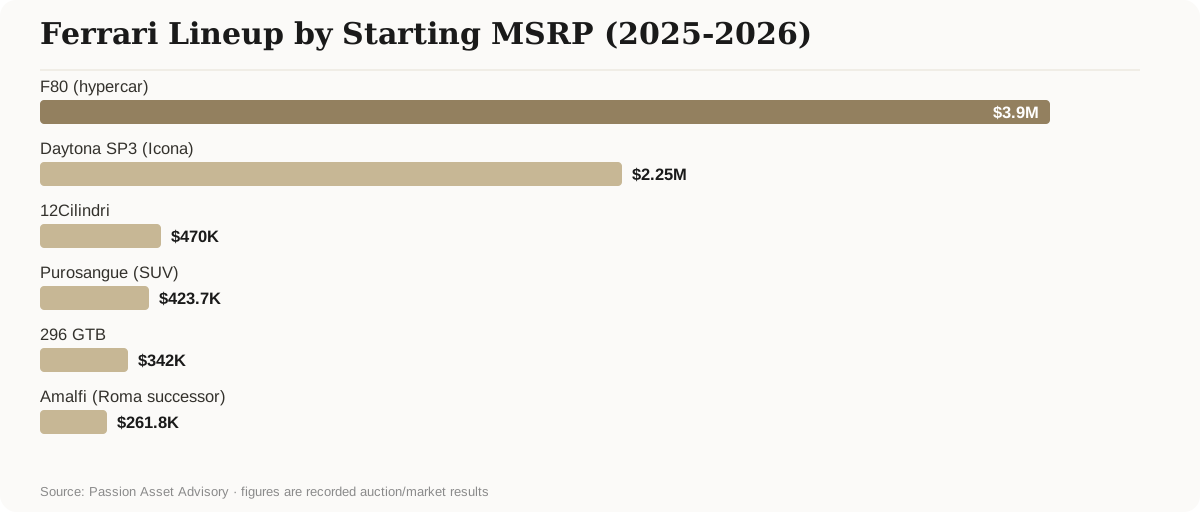
For 2026 the Ferrari range stretches from the new entry-level Amalfi, the Roma's V8 successor, which Bloomberg reports starts at $261,810, up to the limited-run F80 hypercar at roughly $3.9 million (Fox Business, WardsAuto). In between sit the 296 GTB at about $342,000 (Ferrari of Fort Lauderdale, iSeeCars), the Purosangue SUV near $423,686 (iSeeCars), the front-engined V12 12Cilindri coupe around $470,000 (MotorMatchup), and the Icona-series Daytona SP3 built at roughly $2.25 million (Wikipedia, iSeeCars). These are base figures before options and Tailor Made personalization, and limited-allocation models routinely transact well above MSRP.
How much does a Ferrari cost, model by model?
The answer depends on the model and the sale route. This 2026 comparison covers current models, used entry points, limited cars, and collector classics. New-car figures are indicative U.S. starting prices before options, taxes, destination fees, and market premiums.
| Model / tier | Indicative price | Notes |
|---|---|---|
| Used V8 (Portofino, California T, 488) | ~$120k–200k | The realistic entry to the marque |
| Amalfi coupe | ~$261,810 | Current entry model; replaces the Roma |
| 296 GTB / 296 GTS | ~$340k / ~$370k | V6 hybrid, mid-engine |
| Purosangue | ~$430k | The four-door, four-seat Ferrari |
| 12Cilindri | ~$450k+ | Front-engine V12 flagship |
| SF90 Stradale / XX | ~$520k / ~$770k | Plug-in hybrid halo |
| Daytona SP3 (Icona) | ~$2.3M | Allocation-only limited series |
| F80 (hypercar) | ~$3.9M | The current flagship hypercar |
| Collector classics (F40, 288 GTO, 250-series) | ~$2.5M to $50M+ | 250 GTO leads verified Ferrari results |
Indicative U.S. starting prices for 2026. Ferrari confirms the model range, while public prices come from current reporting and dealer data. Request a current build quote before a purchase.
Why are limited-series Ferraris so hard to buy?
Because they are allocated, not sold. Icona cars, hypercars, and many specials go to established clients with a purchase history. Order books close before the public sees a price, and a first-time buyer cannot simply walk in. For most collectors the route in is the secondary market, where allocations and early cars trade privately, often above list. That is exactly where a sourcing mandate earns its fee.
Do Ferraris hold their value?
Most modern Ferraris depreciate like other new cars in their first years, then stabilise; the exceptions are the cars that matter. Limited series, manuals, and significant classics have appreciated strongly. A documented, low-mileage example with full Ferrari service history holds value far better than a cheaper car with patchy records. We benchmark every car against real closed sales. The same logic applies when selling a collector car.
FAQ
Ferrari pricing: quick answers
What is the cheapest Ferrari?
The Amalfi is the lowest-priced current Ferrari coupe for 2026. Its reported U.S. starting price is $261,810 before destination fees and options. Used Portofino, California T, 488, F430, and 360 examples can cost less. Check condition and service history before comparing prices.
What is the most expensive Ferrari?
New, the F80 hypercar starts near $3.9 million, while the Daytona SP3 Icona was about $2.3 million before any secondary-market premium. At public auction, a 1962 Ferrari 330 LM / 250 GTO sold for $51.7 million in 2023. A 250 GTO reportedly traded privately for about $70 million in 2018. The verified all-marque record belongs to the Mercedes-Benz 300 SLR Uhlenhaut Coupé.
How much does a used Ferrari cost?
Used Ferraris span an enormous range. Modern V8 grand tourers start around $120,000–180,000; recent V12s and specials hold far higher. Values turn on mileage, service history (the cam-belt and major-service record especially), originality, and colour. A documented car with full Ferrari service history commands a clear premium over a cheaper, patchy one.
Can you buy a special-series Ferrari without an ownership history?
Rarely at retail. Limited models, including Icona cars, hypercars, and many specials, are allocated by Ferrari to established clients with a purchase history. They are not sold on demand. The route in for most buyers is the secondary market, where allocations and early cars trade privately. A sourcing mandate locates and verifies them without years of dealer loyalty.
Who owns Ferrari?
Ferrari is a publicly listed company (NYSE and Milan: RACE), spun out of Fiat Chrysler in 2015–16. Its largest shareholder is Exor, the Agnelli family's holding company. Piero Ferrari, Enzo's son, holds about 10%. Ferrari is independent today, not owned by Ford or Fiat, despite the famous histories with both.
Can anyone buy a new Ferrari?
For standard models, yes, subject to a dealer order and a wait. But the limited Icona cars, hypercars, and many specials are allocated only to established clients with a Ferrari purchase history. They are not sold on demand. For most buyers the route to those cars is the secondary market, where a sourcing mandate locates and verifies them.
How much does it cost to maintain a Ferrari each year?
Annual cost depends on the model, age, mileage, use, and included maintenance. Budget separately for scheduled service, tyres, brakes, insurance, storage, and unexpected repairs. Older cars can need major clutch, belt, suspension, or electrical work. Ask a Ferrari specialist to inspect the exact car and prepare a model-specific budget.
Does a new Ferrari come with free maintenance?
Ferrari's 7-Year Standard Genuine Maintenance programme covers scheduled maintenance during the first seven years of service life. Ferrari states that it is available across the range and can apply to eligible pre-owned cars bought from an official dealer. Limited editions can have different terms. Confirm coverage for the vehicle identification number with an official dealer.
How much deposit do you need to order a new Ferrari?
Ferrari does not publish one global deposit. The amount, refund terms, allocation conditions, and payment schedule depend on the model, market, and dealer agreement. Ask for the full order terms in writing before paying. A deposit does not guarantee access to a limited-series allocation.
How much does the Ferrari Purosangue SUV cost?
The four-door, four-seat Purosangue starts near $430,000 in the US before options and personalisation. Availability and secondary-market premiums change. Compare the exact build sheet, mileage, condition, and transaction date before using a public price as a valuation.
Sources and further reading: the official Ferrari Amalfi release, Ferrari's maintenance terms, current price reporting, and closed collector-car auction results. Figures are indicative. Read the Passion Asset Advisory editorial standards.
Related: are classic cars a good investment?
Collector Cars
Name the Ferrari. We will find it quietly.
From a first V8 to an allocation-only special, we source through collector networks, verify matching numbers and history with marque specialists, and negotiate on your side.