Data Study · Collector Cars
Are classic cars a good investment?
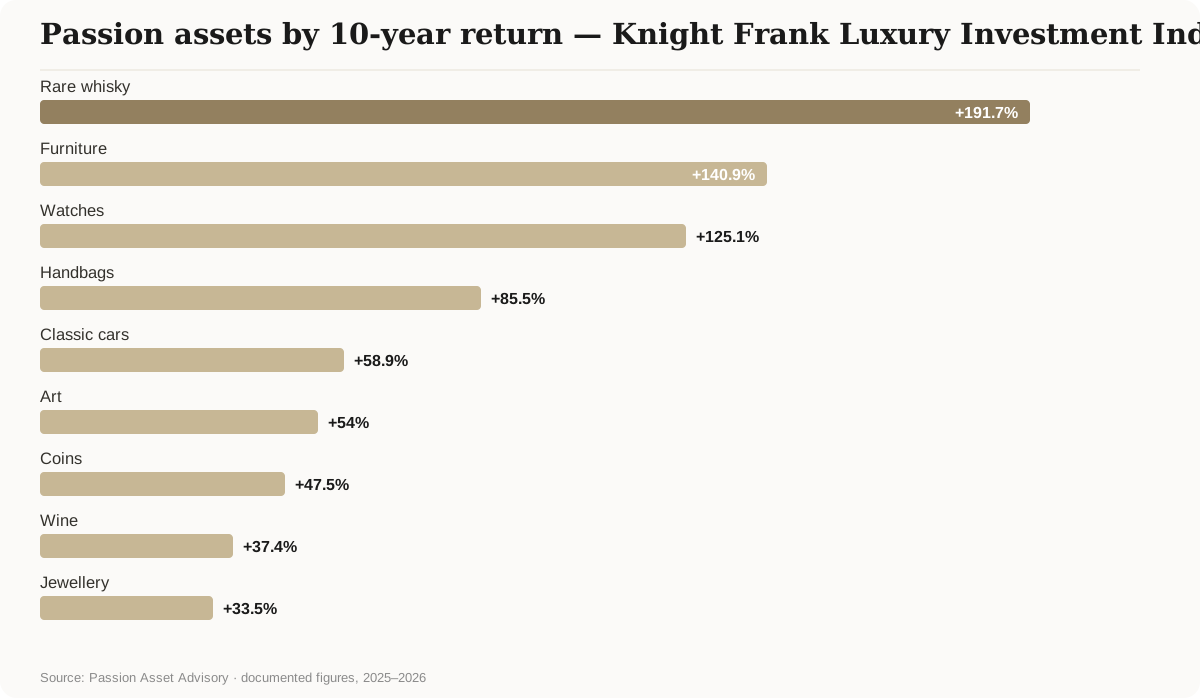
On the Knight Frank Luxury Investment Index, classic cars returned about +58.9% over the past decade. This respectable mid-range result trails rare whisky (+191.7%), furniture (+140.9%), watches (+125.1%) and handbags (+85.5%), while beating art (+54%), wine (+37.4%), jewellery (+33.5%) and coloured diamonds (+3.8%). The broader index has cooled recently, slipping just 0.4% across its 10 tracked categories in 2025 after declines of 2.7% in 2024 and 3.3% in 2023, per Knight Frank's 2026 Wealth Report. As always with the index, the car figure is a class average: blue-chip and limited-production models have far outrun it, while ordinary classics lagged after carrying costs.
Are classic cars a good investment?
The right ones have been excellent. Over the past decade collector cars returned about 185% on Knight Frank's Luxury Investment Index. This was the best result among the major passion-asset classes and was ahead of a dividend-reinvested S&P 500. But that headline hides a wide spread: blue-chip and limited-production cars drove the gains, while ordinary "classics" barely moved after costs.
| Asset | Indicative 10-yr return | Source / note |
|---|---|---|
| Classic cars (class) | ~ +185% | Knight Frank Luxury Investment Index |
| Gold | ~ +120% | Spot price |
| S&P 500 (total return) | ~ +200%+ | Dividends reinvested |
| Blue-chip / limited-production | Often well above class average | Scarcity + provenance; these are outliers |
| Ordinary "classics" | Flat to negative after costs | Most cars are not investments |
Indicative, directional figures across sources and windows; pre-fees and before carrying costs (storage, insurance, maintenance). The class average is driven by top-tier cars. Verify against the primary source before citing.
Which classic cars appreciate the most?
Scarcity, motorsport pedigree, and design icons. Air-cooled Porsche 911s (especially limited editions), classic Ferraris, homologation specials, and low-production supercars have led. Limited build numbers, a documented competition or celebrity history, matching-numbers originality, and a complete service file separate the cars that compound from the ones that merely hold.
What are the real costs of owning a classic car?
More than the purchase. Budget for climate-controlled storage, specialist agreed-value insurance, routine maintenance by marque experts, and periodic restoration. Restoration can run into six figures on a significant car. Transport, pre-purchase inspections, and auction or brokerage fees add up. These carrying costs quietly erode returns on anything but the strongest cars.
What makes one classic car worth more than an identical model?
Provenance and originality. A matching-numbers drivetrain, documented ownership and competition history, factory-correct specification, low and verifiable mileage, and a complete history file can multiply value over an otherwise identical car. Restoration quality also matters. A sympathetic, expert restoration adds value; a poor or undocumented one subtracts it.
Is the classic car market still rising?
It has cooled from its mid-decade highs but stayed firm at the top. Blue-chip and limited-production cars have held value well, while the broader market softened after the 2021–22 surge. As with watches and art, quality and rarity defend value in a downturn; ordinary cars and over-supplied models are the ones that correct.
The honest verdict
Buy a collector car to drive and enjoy, choosing rarity, provenance and originality so value resilience comes with it. The class has genuinely outperformed, but only at the blue-chip end and only after real carrying costs. As a usable, uncorrelated passion asset it is compelling; as a passive investment it demands expertise. We verify history and condition before you buy or sell.
FAQ
Classic car investment: quick answers
Which classic cars are the best investment?
Historically, scarce blue-chip models: air-cooled Porsche 911s and limited editions, classic Ferraris, homologation specials, and low-production supercars with motorsport or design pedigree. The common thread is capped supply and durable demand. Even within these, matching-numbers originality, documented history, and condition decide which individual cars actually appreciate.
Do classic cars hold value better than stocks?
At the top end, the class has returned about 185% over the past decade, near the S&P 500's total return and with low correlation to it. But that reflects blue-chip cars before carrying costs; the average classic, after storage, insurance and maintenance, lagged. Cars diversify a portfolio; they don't reliably out-return equities.
Are new limited-edition supercars a good investment?
Sometimes, but rarely reliably. A few allocation-only hypercars have appreciated immediately, but most depreciate before they recover, manufacturers produce more "limited" editions than buyers expect, and flipping can jeopardise future allocations. The cars that hold are genuinely scarce and have motorsport significance. Not every numbered special qualifies.
How does mileage affect a classic car's value?
Significantly, but it's nuanced. Low, verifiable mileage usually commands a premium on collectible cars, since originality and preservation are prized. But ultra-low mileage can deter buyers who want to drive, and undocumented "low miles" raise suspicion. A complete history file proving the mileage matters more than the number itself.
Sources & further reading: Knight Frank Luxury Investment Index; HAGI and marque indices; major auction results. See also how much a Ferrari costs, the most expensive cars, Ferrari vs Lamborghini, and Rolls-Royce vs Bentley.
Related: the best classic cars to invest in.
Collector Cars
The model is the headline. The history file is the value.
We verify provenance, matching numbers and condition, source blue-chip and limited cars privately, and sell to collectors discreetly. We represent your side only.